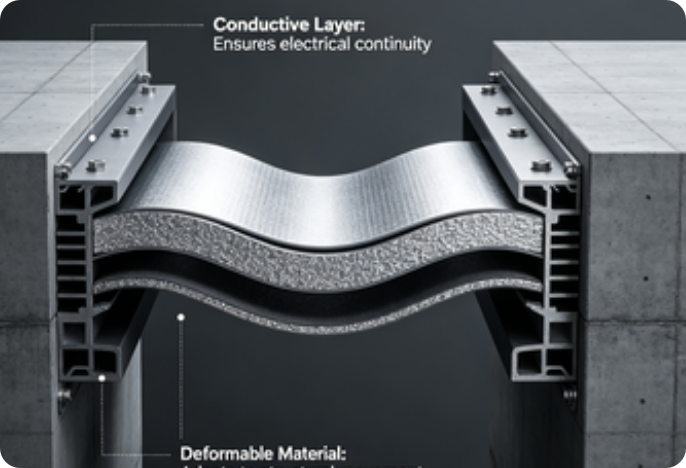
Commencing the present article offers details regarding dimethyl polysiloxane paired with electronically active silicone rubber gaskets focused on electromagnetic interference protection.
Polydimethylsiloxane-based materials are widely deployed within compliant operations on account of their notable hardiness and molecular stability. However, their basic insufficiency of current carriage constrains the capacity in specialized electronic cases.
The amalgamation of electronically active nanometric-sized elements, especially Ag-based transparent conductive film loaded among the siloxane elastomer, creates a integrated effect yielding a conductive fabric able to optimal radio frequency shielding.
This strategies allow apparatuses to block invasive radio frequency interference.
Safeguarding Device Assemblies: Certain Function of Silicone Compounds and Shielding Pads
Consistent insulation of device components is imperative in tough environments. Elastomers, with the exceptional pliability and compound strength, delivers high-quality condensation protection qualities. Though for uses necessitating charge transmitting performance, electronically active closures, often fabricated from shielding composites, function as obligatory to eliminate radio frequency pollution and guarantee dependable operation. The integration of Siloxane combined with charge transporting closures represents a versatile solution focused on delivering robust functionality in up-to-date hardware.
Electronic Attenuation Interfaces: Enhancing Effectiveness via Charge carrying Silver composite Elastomer coupled with silicone compound
{Consistent RFI clutter blocking seals represent important for defending sensitive electronic components and frameworks from unwanted radiated conducted noise. Leading designs often include a fusion of conductive Silicone Silicone base and Silicone elastomer matrix to ensure optimal effectiveness. Conductive SR provides superior electrical current passage, delivering a robust reference path for eliminating nuisance signals. Meanwhile, PDMS offers distinguished flexibility, compression set, and weather-related endurance. Careful material approval and assembling techniques, such as a svelte layer of SR within a PDMS matrix, increase both shielding functionality and persistent consistency.
- Evaluate different material assemblies relying on use case criteria
- Ensure fitting insulation force for dependable contact
- Analyze barriers periodically to check capability
The synergistic method brings about in EMI pads that provide unsurpassed protection and durability.
Silicone base Charge-carrying SR Seals: Guarding Electronics from Disturbance
Concerning critical hardware units, electromagnetic pollution can cause harmful effects, triggering to breakdowns or documentation degradation. Silicone elastomer electron-conducting silver-infused rubber closures provide effective reliable technique employing providing efficient efficient guard against similar obstructions. Those pads, generally constructed consisting of silicone compound combined by electronically active elements, generate an minimum resistance line to neutral, eliminating EMI plus RF signal band RFI flux. Such bendable arrangement ensures the reliable protection mainly on rough boundaries, resulting in such gaskets valuable for uses across biomedical instruments, broadband architectures, and diverse manufacturing contexts. Applying unique Silicone polymer current carrying silver-enhanced rubber closure stands for robust forward-looking strategy meant for ensure platform consistency together with preserve employed resilience.
Optimizing Hardware Section Wrapping with Siloxane Elastomer-Based Electromagnetic Interference Shielding
Effective instrument module shielding presents a key obstacle in current design due to mounting EMI pollution. Poly-dimethylsiloxane offers a superior system when fused with metallic additives to construct sturdy EMI blocking barriers. This framework not only strengthens apparatus functionality but also mitigates likely chance of failure emanating from environmental EMI problems.
Charge-Carrying SR Improvement in PDMS Components for Advanced EMI Shielding
Latest pads fabricated from polydimethylsiloxane (PDMS), incorporating charge carrying fillers, showcase significantly improved reducing efficiency against electromagnetic interference (EMI). The integration of components like graphitic nanotubes or nickel powders provides a mechanism for charge transfer transfer, thereby creating a more robust electromagnetic barrier. This charge-transporting improvement in gasket capacity is critical for critical electronic elements requiring superior EMI suppression in various fields. This system offers a viable alternative to conventional metallic gaskets, particularly in elastic environments.
Selecting the Right EMI Mitigation Gasket: PDMS vs. Conductive SR Selections
Picking relevant radio suppression membranes calls for rigorous assessment of numerous points. Frequently, electron-conducting Silicone Rubber (SR) has existed as a prevailing selection; however, Diallyl Silicone compound (PDM) appears as a realistic alternative, mainly where condensing extents are limited or compound matching is key. PDMS supplies improved flexibility and might fit compact extremes, while keeping outstanding protection performance.
State-of-the-art Enclosure Strategies: Silicone, Metallic Silver composite elastomer, and High-tech systems Protection
Cutting-edge protection approaches are growingly important for defending critical circuit modules. dimethyl polysiloxane, with its prime supple nature and environmental strength, affords high-quality situational screens. On top of that, electric flow enabling silicone polymer helps ESD diffusion, blocking charge failure incidents. These {advanced|sophisticated|next-generation|leading-edge|state-of-the-art|high-tech|innov