An heritage oriental sword serves as a impressive example of fabrication, but suppose you long for to reveal your separate flair? Personalizing your weapon is a significant journey, allowing you to craft a truly unique piece. From the hold wrapping and collar to the barrier design and temper line, each part offers a chance for unique expression. This analysis delves into the area of katana adjustments, providing facts for both beginners and proficient enthusiasts desiring to leave their footprint on the classical art of the samurai.
Newcomer's Legitimate Mastery
For individuals prepared to embark on the enriching journey of martial arts involving swords , 1060 steel katanas furnish an remarkable entry point. This specific grade of tool steel balances a fine equilibrium between affordability and functionality . While inferior to hard as elite steels, 1060 accommodates a reasonable level of edge development , making it ideal for starters to cultivate the preliminaries of sword maintenance and experience the elegance of handcrafted Japanese weaponry. It’s a excellent choice for acquiring experience without the capital burden of more high-grade steels.
Ten Ten Steel Sabers : Harmonizing Functionality and Expense
Providing for connoisseurs seeking an authentic cutlass experience without overpowering the cash reserve , T10 material katanas represent a appealing option. These daggers offer a marked improvement in endurance compared to less expensive alternatives, exhibiting acceptable edge retention and adequate flexibility for basic incising techniques. While not rivaling the top-notch characteristics of superior steels like T100 or folded iron , T10 provides a notable blend of ability and affordability , making them a well-liked choice for trainees and those on a controlled earnings .
Transcending the Blade : Enhancing Your Edge's Components and Grip
While the smoothed cutting surface is undeniably the primary point of a katana, truly elevating its elegance lies in the cautious customization of its hardware and grasp . This method allows collectors to present their one-of-a-kind preference . Assess the extensive possibilities: menuki - decorative adornments that supply visual appeal ; the hamon encasements – often delicately carved ; the tsuka core itself, wrapped in time-honored ito braid ; and the fusa stopper , which can be formed from various matter like bullion or nacre.
- Pick themes that correspond with you.
- Experiment with multiple materials .
- Stress quality for a persistent impression .
The Enchantment of the Katana: Past, Crafting, and Elements
An eastern saber holds a singular allure, steeped in times of Nippon's history and culture . More than merely a apparatus of battle , it's a token of the champion ethos – a fusion of artistry and governance . Its expansion spanned several generations, with early edges evolving into the sophisticated curvature and effective edge we acknowledge today. The fabrication involved is truly phenomenal , requiring epochs of training to conquer . The process involves a complicated folding of pure iron , creating layers that enhance the metal’s flexibility and carving ability. Numerous schools of processing arose , each with their unique secrets and approaches for achieving the supreme proportion and crispness - a truly laborious pursuit.
- Initial Katana models
- The purpose of the samurai blade in fighter class culture
- Time-honored fabricating procedures
Determining the Fitting Steel for Your Weapon Project: 1060 vs. T10
Choosing the correct steel is absolutely important for any katana project, and the decision between 1060 and T10 can be tricky. 1060 is a popular American steel, offering a good balance of rigidity and persistence, supplying it comparatively easy to manage. t10 steel katana However, T10, a Oriental steel, ordinarily boasts increased wear sustainability and can conceivably achieve a more ultimate hardness, although it can be somewhat difficult to apply and requires detailed heat forging. Consider your proficiency and projected results: for a beginner, 1060 may be a safer platform, while the veteran smith might seek the extra merits of T10.
- User-friendliness of Controlling
- Friction
- Ultimate Hardness
Unlocking the Potential: Advanced Katana Customization Techniques
Mastering the art of katana alteration extends far beyond basic finishing. Serious smiths are now researching advanced techniques to truly activate a blade's hidden potential. This includes intricate work with the temper rim, utilizing specialized ingredients for differential tempering and carefully opting for the form of the tsuba to optimize balance and quality. Beyond purely functional alterations, artisans are increasingly focused on generating unparalleled aesthetic charm, through complex etching and layered textures that truly transform a katana into a masterpiece.
From Elemental Metal to Artistry: Forging a 1060 Blade
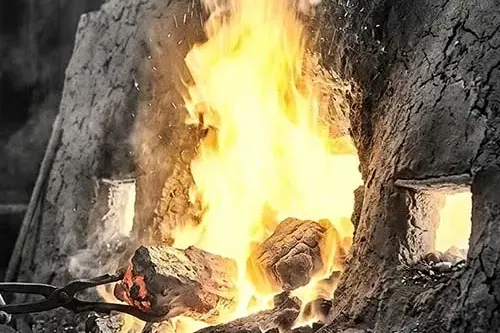
The journey embarks with typical 1060 substance, a resilient material far lacking the fine katana it will evolve . Accomplished bladesmiths utilize a sophisticated process of layering and forming the raw steel, repeatedly firing it and flattening it to extract impurities and build a uniform grain structure. This exhausting process, often going on for months , builds the imperative strength and elasticity characteristic of a original Japanese blade . Extra heat manipulations , including accurate hardening and cooling , are mandatory to achieve the desired steadiness of sharpness, persistence and magnificence.- Layering: Minimizes impurities and generates grain structure.
- Forging: Forms the steel into the initial blade form.
- Quenching: Controls the final hardness and flexibility.
The Perpetual Attraction of the Katana: Extensive Study of Steel and Alteration
Such long-standing katana survives a striking symbol within Japanese tradition , its attraction far overtopping mere arms and armor . Forged from traditional steel and often featuring intricate patterns , the technique of creation itself is a respected art. Beyond the primary craftsmanship, the ability to adapt a katana - from the quench mark to the shaft wrapping and fitting - affords for a honestly individual demonstration for both worshippers and followers alike. This amalgamation of classical steelwork and boundless personalization creates the katana's continued widespread acceptance across the realm .
